Happy Halloween!

And in keeping with the spirit of the season, here’s some spookiness associated with one of the stories in the book.

At midnight on Feb. 26, 1888 a reporter for the Nashville American dropped by the county jail on Front Street (now 1st Ave.). John R. Grimes, the night turnkey, met him at the door, shaking and in a sweat, and stated, “I’m mighty glad to see you!” And thereby hung a strange tale.

Grimes said he’d been on his nightly rounds, lantern in hand, when he paced down “Murderer’s Row,” where those held for capital crimes were incarcerated. The cells of the row were vacant save one, which was occupied by N.B. Lester, who was sentenced to death for the murder of J.T. Lane at Lebanon. (He was hanged that spring).

Grimes was thinking about Lester and his upcoming execution, when all at once his lantern (which had just been filled and the wick trimmed) went out without explanation, leaving him standing in “total darkness” outside the last cell on the row, which had most recently been occupied by Ben Brown.

Ben was a Civil War veteran who had been convicted of murdering his neighbor Frank Arnold in a gruesome crime that became known as the “Headless Horror.” Brown had spent his final days in that cell, piously reading his bible while the attorneys fought for his life. On Apr. 15, 1887, after his last appeal ran out, he was hanged in the yard of the jail before a small crowd of witnesses.

As Grimes’ eyes adjusted to the darkness, he focused on the door of Brown’s old cell. And then he got the shock of his life. “On my honor as a man,” he told the skeptical reporter, he saw Ben Brown, dressed in his familiar long black coat, his little bible clutched in his hand, just as he’d appeared in life. The ghost stood at the bars, glaring out at Grimes, muttering something that the jailer couldn’t make out, “just as he did the night before he was hung.” Grimes confessed he was frozen in fear, unable to run or shout for help.

Just then he heard the bell ring upstairs announcing the arrival of the reporter, and the spell seemed to break. Grimes ran upstairs to answer it and stammered out his story to a rather puzzled and bemused pressman.

However, there was at least one other witness on his side. An African-American man who was housed in the cell next door to Brown’s during and after the execution later made a surprising statement. He said that he too had seen Ben Brown several times…both before and after he’d hanged.

Presumably, Ben’s ghost was evicted when the jail was torn down the following year. However, if you go strolling along First Avenue today, keep your eyes peeled: that night-owl you see in the long black coat with the black hat on his head and the bible in his hand may not be all that he appears to be at first glance…
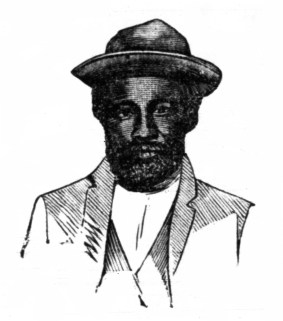
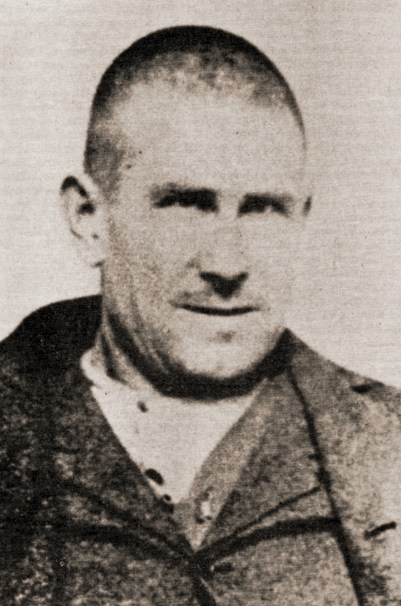
Ben Brown.jpg
Ben Brown, from a photo, ca. 1886


Happy Halloween!

It Coulda Happened to Anyone…

Here’s some more late-breaking news from the fall of 1865, as Nashville was beginning to recover from the late Civil War.

It was a crime-ridden season, and among the shootings and stabbings and black-jackings that happened every night in Smoky Row, came this sensational piece of intelligence that seemed to indicate an attempt at mass-murder:

We learned yesterday that a family of six persons living on Line street, were poisoned by a servant girl who used arsenic instead of leaven in making bread. No deaths ensued, but they were a very sick family from the effects of the deadly poison…” [Daily Dispatch, Sep. 30, 1865.]

There was a brief rumble in the press about the incident, with some speculation about whether it was really an accident, which prompted the following remarkable press release:

“To the Editor of the Nashville Dispatch: In yesterday morning’s Dispatch I find some mistakes. It was not done by a servant, as we do not have any. I made the mistake, using arsenic, instead of leaven, at supper time, in the biscuit, and five of the family partook of them, and were made very sick, but it did not prove fatal to any. We are all doing well. It was Mrs. E.V. Wilson’s family, and the mistake was made by her eldest daughter. Very respectfully, Isabella E. Wilson, Corner of Spruce and Line streets.” [Daily Dispatch, Oct. 1, 1865.]

It’s a bizarre story, made more so by the flippant “what will the neighbors think” rebuttal offered by the family. It begs follow-up questions: What was a tub of raw arsenic doing in the kitchen next to the leavening? Who was the lucky one who didn’t “partake” of the biscuits? Was it the eldest daughter? And did that indicate knowledge of the poison beforehand? Was she ever allowed to cook dinner for the family again?

Alas, many questions and no real answers in this obscure family drama. For the record, the address given would today be the corner of Jo Johnston and 8th Avenue…if there was still such an intersection. Rosa L. Parks Blvd. now passes right over the former site of the residence. Isabella E. Wilson is listed, age 30, on the 1860 census, in the same household as 61-year old Eleanor V. Wilson (evidently “Mrs. E.V. Wilson”) and five members of the John. D. Gower family (probably her son-in-law and grandchildren). The author of the note is evidently the one who made the lethal biscuits, and it probably explains its “no harm done” tone.

Just another day in postwar Nashville. More to come…

One Mean Mamma Jamma

Check this dude out:

hanks-mugshot

Meet Orlando Camilla Hanks (not the most prepossessing name for a Wild West outlaw). He went by “Deaf Charley” due to his habit of cocking his head to one side to favor his good ear. He was a brief but very valuable associate of the consortium of outlaws headed up (sort of) by Butch Cassidy and “Kid” Curry who congregated around the Hole-in-the-Wall country in Wyoming (better known as the “Wild Bunch.”) Fittingly, his only known photo is this mugshot, lovingly taken as he entered the Deer Lodge penitentiary in Montana in 1894.

I love this photo…I’ve always said that he looks like someone who would enjoy playing with something until it breaks. The prison haircut does nothing to dissuade that impression.

Those of you who know your history understand what the connection is between this fella and Nashville. Those who don’t are in for a treat: check out my new article in the October issue of the Nashville Retrospect to learn about Hanks and the merry chase he led around this quiet Southern city some one-hundred-and-fifteen years ago.

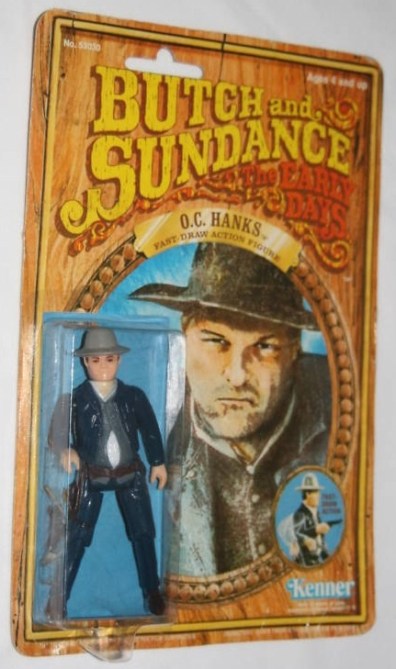
He had some post-mortem coolness that he really didn’t deserve. He showed up in the 1979 western Butch and Sundance: The Early Years (Days), played by the uber-awesome Brian flippin’ Dennehy.

Supporting cast or not, he even ended up with his own action figure!

1294436624_m
Imagine this face staring up at you from underneath the tree. Happy Holidays!


And if anyone is looking for the perfect Christmas gift for me this year (hint, hint).


Talk to you soon. Big things getting ready to happen ’round here.

Requiem for Ike

One hundred years ago today an era of Nashville history came to a close.

On the morning of February 3, 1916 former gambler and saloon keeper Ike Johnson committed suicide in his room at the Southern Turf building on 4th Avenue, just days before he was to be evicted from the room where he had lived for the previous twenty years.

Ike had been one of the leading lights of the Gilded Age saloon scene in town, owning and operating some of the “toniest” establishments in the city, only to lose it all when Prohibition was enacted following the killing of his old nemesis, Senator Edward Ward Carmack, in 1908.

He was known as a glittering tough, a generous gambler, an abstemious saloon man, and a lifelong bachelor with a soft heart for children and animals. And though he himself said that “It is not good for a man to live the way I have lived,” his passing was mourned by even those opposed to his lifestyle. With his death, one of the last links to Nashville’s opulent Victorian highlife was severed.

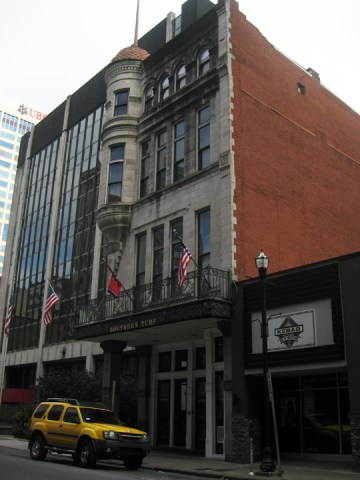
He rests today in a quiet spot in Mount Olivet Cemetery. His palace, the Southern Turf, still lives on today, reincarnated as a modern office building. It is one of the last reminders of the old “Gentleman’s Quarter,” where nighttime never seemed to fall before 1900.

ST Small
Ike Johnson’s Last Stand: The Southern Turf Building on 4th Avenue.